Dene language plan
Four steps, led by Elders
A draft plan. Each step can stop and still be useful. Elders' word is final on what is shared.
-
Step 1Planned
Word of the Day robots, from the pilot kit
- Elders choose a small set of everyday words and the approved spelling for each.
- At the pilot day (draft: about 10 youth), youth build five solder-free Word of the Day robots with a micro:bit, a small MP3 player, a speaker and a memory card. Press a button and hear the word.
- A word is loaded only after an Elder gives consent. If a spelling is not approved yet, the card stays blank.
- This uses the same pilot kit. No second kit is bought. Draft cost for the whole pilot day: $1,350.89 CAD, an estimate, before GST, PST and the Elder honorarium.
-
Step 2Planned
The Elder Voices audio dictionary
- A quiet recording corner where Elders record words, one at a time, when they wish and with consent.
- A simple list on a community computer keeps each word, its approved spelling, the date, the consent status and where it may be played.
- Files stay on community devices, such as a community laptop and USB drive, or band archive drives if the Nation decides. There is no public website for the recordings.
- Youth help with filing and playback tests. They do not invent spellings, and they never record an Elder alone.
-
Step 3Planned
A youth-built talking buddy, and the Talking Trail Markers
- Youth design and build a small talking robot they can wear on a shoulder strap or carry. It plays only Elder-approved recordings from a memory card, works offline, and uses no AI.
- The idea is inspired by wearable language robots like the SkoBot from The STEAM Connection. We are not partnered with them. This is our own plan and still a draft.
- Outdoors, the solar Talking Trail Markers play an Elder-approved word when someone holds a button. Land keepers choose the spots, and markers go up only where the Nation approves.
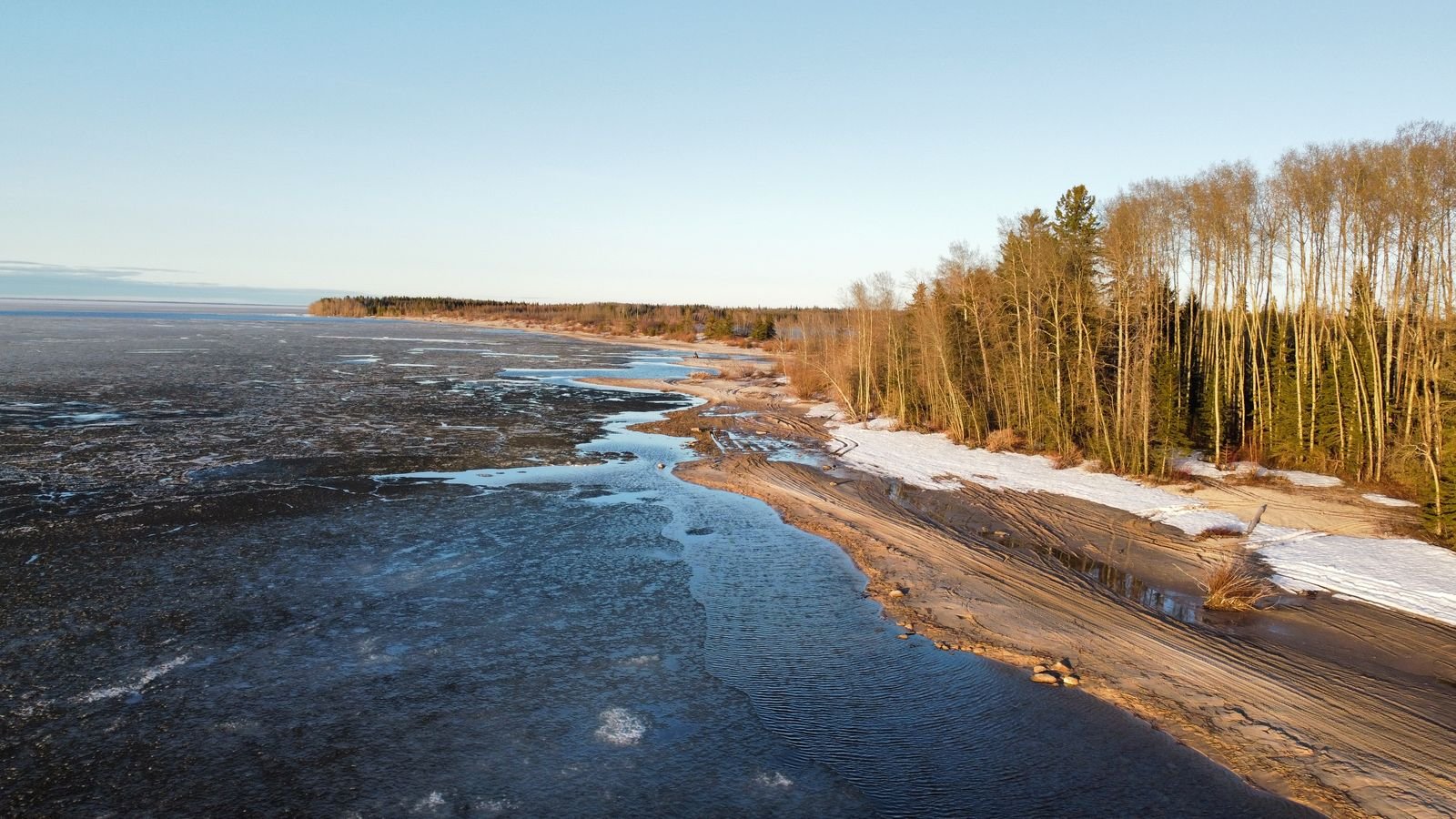
Spring on the shore. -
Step 4Planned
A wider share, only if Elders say yes
- If Elders want it, a page of approved words in text could be shared later, on hosting the community controls.
- Audio stays off outside hosts and off AI tools.
- This step is not needed to start. If Elders say no, it does not happen.

No Dene words or Elder names are shown here. Words and spellings come only from Elders, for the Dillon and Buffalo River Dene Nation dialect.
OCAP
The community owns the language.
This work follows OCAP® (Ownership, Control, Access and Possession). OCAP® is a registered trademark of the First Nations Information Governance Centre (FNIGC).
Ownership and possession
Recordings and the word list belong to the community. They stay on community devices, never on a personal cloud folder or a laptop that leaves the community.
Control and access
Elders decide what is recorded, who may hear it and where it may be played. A community data steward, chosen by the community, looks after the archive and the access list.
Consent and withdrawal
Consent is given before each recording. An Elder can take a recording back at any time, and every copy is removed from robots, memory cards and the archive.
No AI upload
Elder recordings are never uploaded to AI companies, and never put through speech-to-text, translation or voice clone tools.
This is a draft for community review. We will confirm local rules with Buffalo River Dene Nation before any recording day.